The Influence of Match Officials on Goal Totals in Professional Football Betting
Written by Avery Franke · Nov 6, 2026
The Influence of Match Officials on Goal Totals in Professional Football Betting
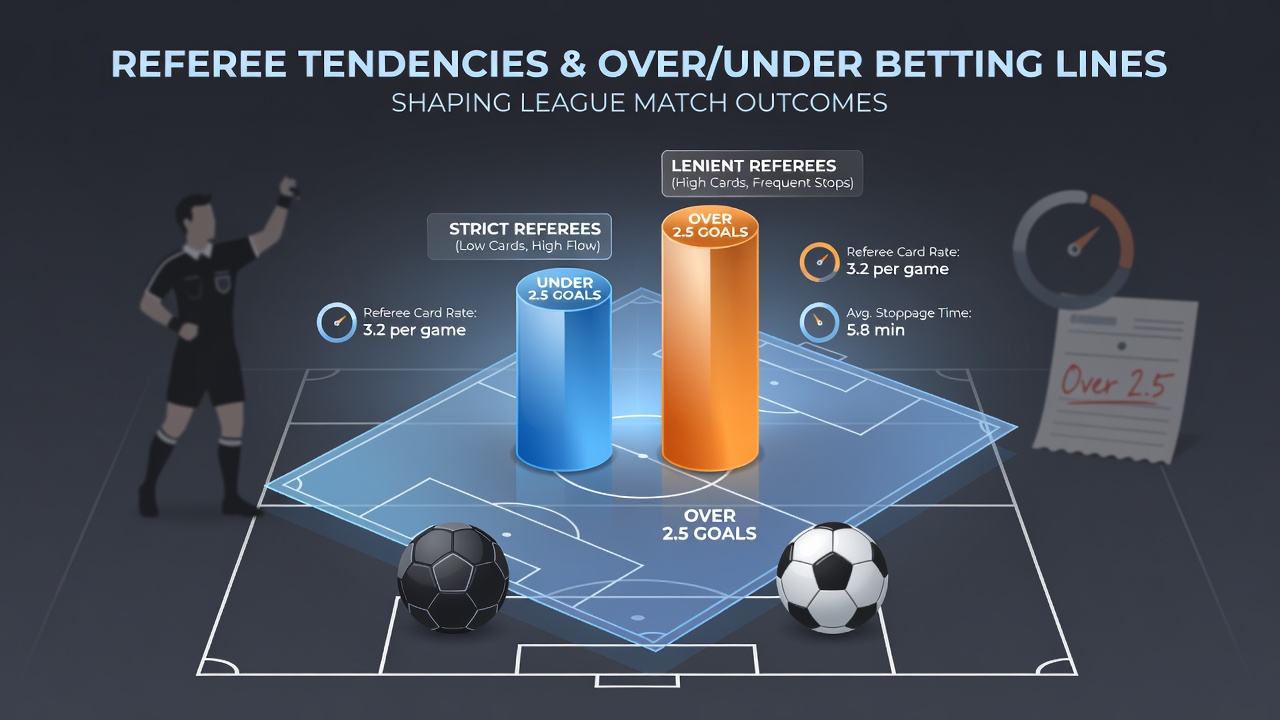
Referee tendencies play a measurable role in how bookmakers set and adjust over/under betting lines for league matches, since officials differ in their approach to fouls, cards, and stoppage time that can extend or limit scoring opportunities. Data from major competitions shows these patterns emerge across seasons because each referee brings consistent habits that influence match flow and total goals.
Tracking Official Patterns Across Competitions
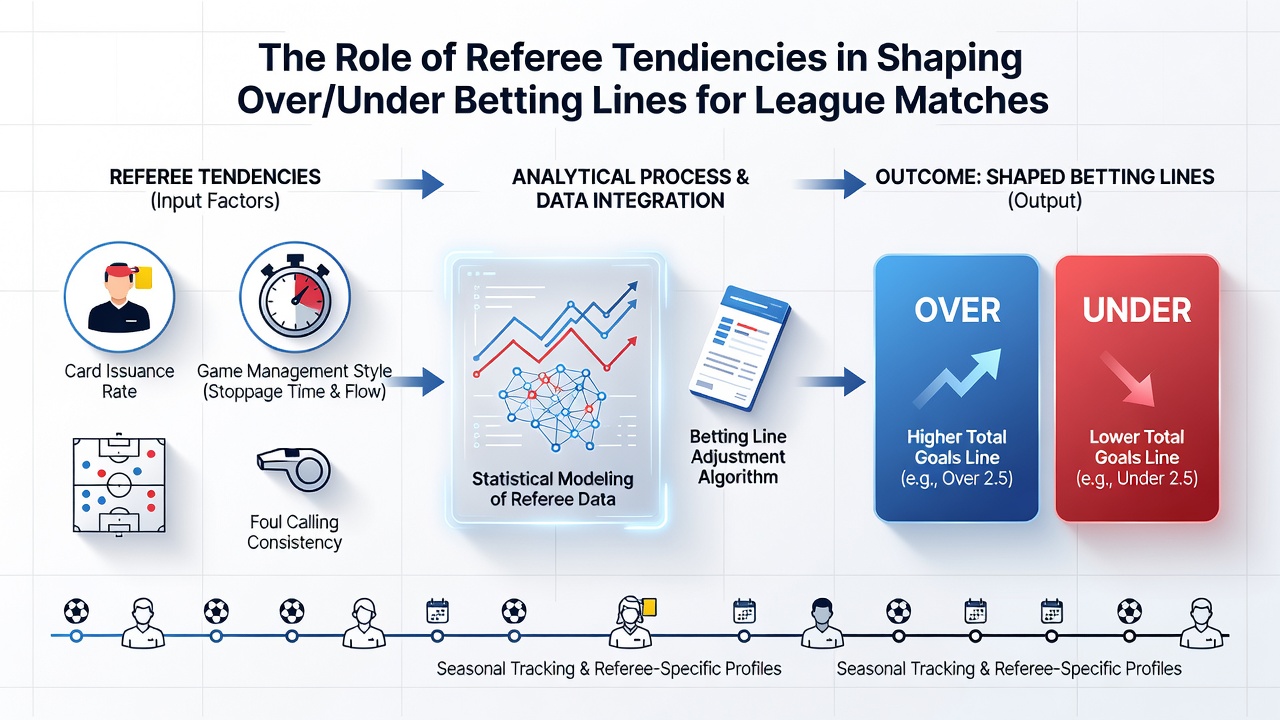
Analysts compile referee statistics from league records that include average fouls per game, yellow cards issued, and minutes added for stoppages, while bookmakers incorporate similar datasets when they open initial totals markets for fixtures. Studies from institutions such as the University of Sydney's sports analytics group indicate that referees who average higher card counts often see teams adopt more cautious styles that reduce open play and lower goal expectations. Those same datasets reveal referees who allow longer stoppage periods correlate with slightly elevated goal outputs because added minutes create extra chances late in matches.
How Markets Incorporate Referee Data
Betting operators adjust over/under lines after reviewing historical referee assignments because sharp bettors target discrepancies between public perception and detailed official profiles. When a league releases fixture lists with assigned referees, markets move within hours as traders recalibrate totals based on each official's documented tendencies rather than team form alone. Figures from European competition archives demonstrate that lines for matches assigned to high-card referees shift downward by 0.25 to 0.5 goals compared with averages for low-card officials in the same league.
League-Specific Variations in Official Impact
In top European leagues, referee effects appear most pronounced in mid-table contests where motivation levels already produce tighter scorelines, whereas title-deciding matches show smaller deviations because attacking intent overrides individual official styles. Australian A-League data released through regulatory filings highlights similar patterns, with certain referees consistently linked to matches finishing under the total because their stricter foul enforcement disrupts rhythm and increases stoppages. Observers note that these adjustments occur before kickoff yet continue to evolve as live betting incorporates real-time referee behavior during the first half.
November 2026 Data Releases and Market Responses
In November 2026, updated performance metrics from several confederations became publicly available and prompted immediate recalibrations in totals markets for remaining league rounds. Those reports showed measurable shifts in stoppage time averages for a cohort of newly promoted referees, leading operators to widen lines in leagues where those officials received increased assignments. Industry reports from bodies such as the Canadian Gaming Regulatory Authority documented parallel trends in North American competitions where referee data integration produced tighter correlations between pre-match totals and actual outcomes.
Case Examples from Recent Seasons
One widely cited example involves a Serie A referee whose matches produced under outcomes at a higher rate than league norms over multiple campaigns, prompting bookmakers to shade totals lower whenever that official received prominent fixtures. Another case from the Bundesliga illustrates how a referee known for extended added time saw over bets succeed more frequently, resulting in lines opening higher once his schedule appeared. Such patterns repeat across divisions because consistent referee profiles allow markets to price risk more precisely than generic league averages would permit.
Conclusion
Referee tendencies supply one layer of information that shapes over/under lines across league schedules, and operators continue to refine their models as fresh data emerges each season. Those who study official records gain access to an additional variable that interacts with team styles, venue effects, and scheduling demands, while the underlying statistics remain available through league archives and regulatory summaries from multiple jurisdictions.